
ORIGIN STORY: PTSD
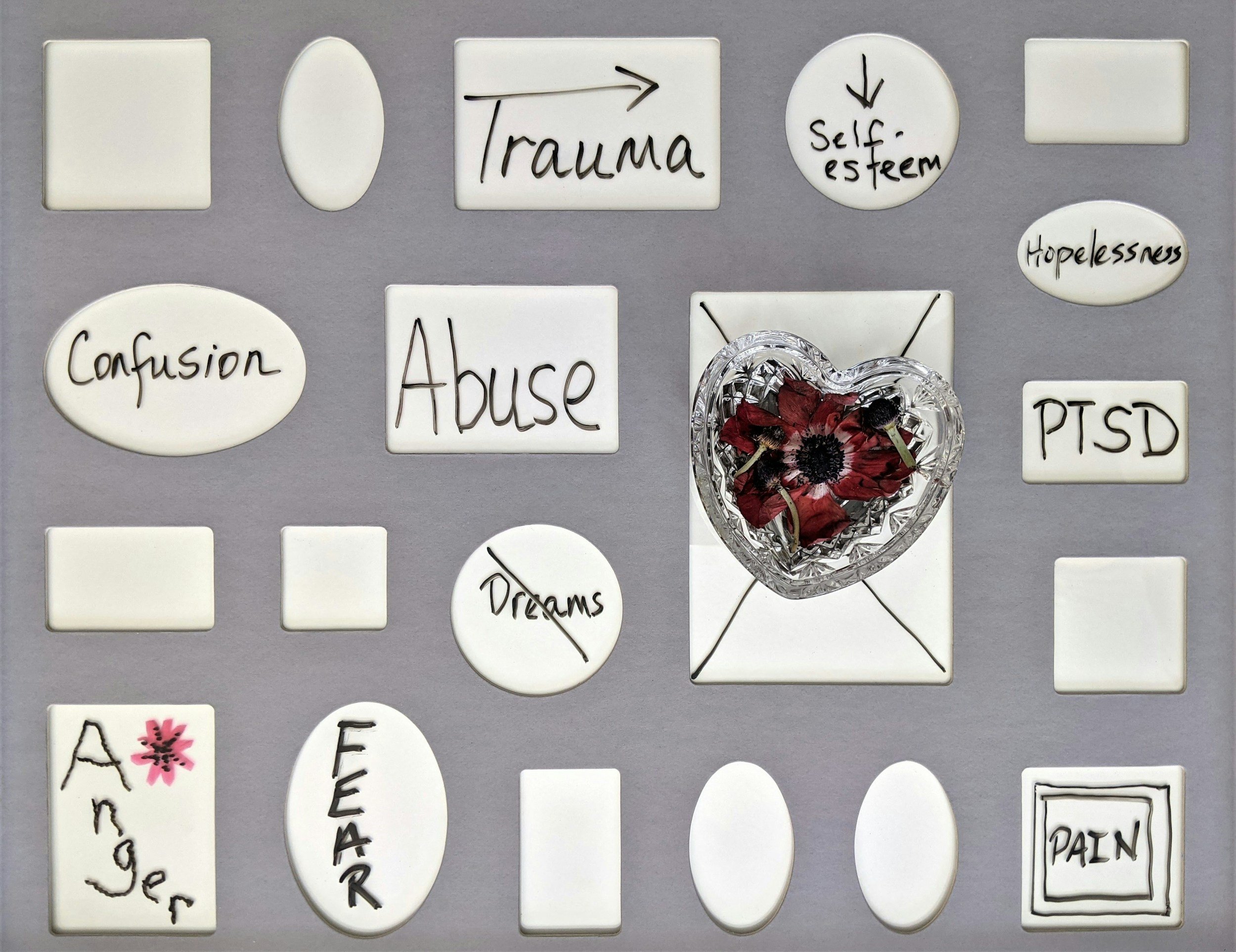
Image source: Susan Wilkinson (Unsplash)
“Trauma is personal. It does not disappear if it is not validated… When someone enters the pain and hears the screams healing can begin.” — Danielle Bernock
PTSD: Living with the Unknown
Ever since I can remember, I always had an impatient side to my persona. If things didn't go the way I thought they should, inanimate objects took the brunt of my anger. One time (in 1989), I got pissed off that the family dog bugged me to go out (for the umpteenth time that night). As I was leaving my room, I punched the paneled wall. Instead of my fist going straight through, I struck the stud and broke my hand. Did I learn my lesson after that one? Not even close.
In the years that followed our department suicide, I noticed (not) that my impatient side became even more augmented. Road rage was a common occurrence- you know the kind: driving on the highway with some jerk tailgating too close and then swerves angrily around you. I would respond with "okay motherf***er, let's go."
Suddenly, I am driving 90 mph trying to outgun this guy when my wife hits me and says, "Hey buddy, slow down! Not everything you drive is big, red, and has lights and sirens!" I would snap out of it and resume normal driving.
One of the hallmarks of my undiagnosed PTSD was an inability to deal with conflict effectively. I had major blowups with colleagues who pushed my buttons on certain issues, one of which my chief said (in a staff meeting) made even him uncomfortable.
I was also in the middle of two different family feuds, one that lasted for the better part of 10 years, and the other 5 years. You could not reason with me, ever. One thing that stung me good was when a colleague told me that I was unapproachable. Another said, "What happened to the positive upbeat guy that came to this department a few years ago?"
I thought to myself, "How could this be? I am an easy-going guy; they are the ones who are unapproachable." It all boils down to one's perspective, or how they view themselves in the mirror. It's not me, it's them. You get the idea.
As time marched on, I began to dislike the person I had become and could not figure out why. I just chalked it up to the environment I grew up in, where impatience was a virtue. Each blow-up was followed by internal self-talk in which I would chastise myself for being an idiot. Sometimes I would even bang my head off the wall to silence the pain.
My greatest regret is that my wife, Judy, had to endure this as well. Any time I had an episode, she took our dog and went up to the bedroom saying to herself, "Tim is being an as***le again." If I couldn't help me, how could she? I will return to this later.
This was an exhausting way of life, and after 16 years of living like a bull in a china shop, my healing journey would begin - all because of an 8 ½ x 11 piece of paper.

Image source: Angèle Kamp( Unsplash)
8 ½ x 11
In the years following my friend's suicide, I said to myself countless times that the department should have or needed to send us to counseling. I waited and waited, but it never happened. I heard myself utter those words each time and never followed my own self-talking advice. In the latter part of 2013, I resigned myself to the fact that my department would not send me to a therapist. (In their defense- never once did I ask for this help). The fact of the matter was that we had nothing in place except to follow the "suck it up and move on" plan of action. We were just not trained for this. Given this, I embarked on the quest to change this traditional thinking but had no idea where to begin. In 2014, my life changed all because of this 8 ½ x 11 piece of paper.
One early morning in January of 2014, I passed by our training board and saw this flyer, which announced “INTRODUCTION TO FIREFIGHTER BEHAVIORAL HEALTH." I immediately became intrigued and moved in closer as if this piece of paper had beckoned me forward. This intro to behavioral health was a 1-day workshop being hosted at a fire department that was too far away for me to attend.
However, I called the listed phone number and spoke with a woman named Sarah, a licensed professional clinical counselor. We had a great conversation where I told my story about my friend's death. She said, "It sounds like you have a lot of trauma going on." She then asked if I would be part of a trauma and first-responder workshop she ran, where I would have 15 minutes to tell my story to psychology and human resources students at Lewis University in Romeoville, Illinois. Not only that, but she also asked if I wanted to join a group that was forming, called Illinois Firefighter Peer Support (ILFFPS). Sarah encouraged me to apply and attend the 3-day training to become a peer support person.
I accepted her request to both events and began to think that this was right up my alley. What better way to bring behavioral health to my department than by joining a new movement here in Illinois. While preparing for the workshop, old feelings that I buried in the deepest recesses of my mind began to resurface.
I was required to develop a lesson plan for the Lewis workshop by answering a series of questions. As I did this, I began to live an unexamined life and felt this downward emotional spiral. On the day of the workshop, I began by reading a short narrative (detailing my friend's suicide) I had written years before for an English composition class. I could not utter even one sentence before I broke down in tears.
Thoughts began to race in my head: "What is the matter with you? You know this story. You are over it" – and so on. I was exhausted at the end of the longest 15 minutes of my life. As I left the room, Sarah cautioned me that the peer training would be 3 long days. I told her that compared to this, it would be a walk in the park. Boy, how wrong I was about that.
Three weeks later, Sarah gathered all the speakers for a debriefing on the Lewis experience. Once again, I began to sob in anguish about my friend's death. As I was leaving, Sarah had offered her services (or would find someone for me) to talk about these resurrected feelings. I told her that I would keep that in mind (I know, I know – there goes Tim avoiding what he said should have happened a long time ago).
Two weeks later, I attended the first ILFFPS training with 30 other brothers and sisters in the fire service. We shared our stories with great emotional release and learned all about the various behavioral health issues affecting first responders.
On the second day of training, when Sarah discussed PTSD, it felt as if I had just smacked my face into a brick wall. I mouthed the words "I have a problem here" and rested my head on the table. During the next class break, I summoned the courage to sit down in front of Sarah and told her I was going to take her up on her offer to face these issues. She gave me her card and told me to make the first available appointment. At lunchtime, I made that very call, tears in my eyes, knowing I could finally release the burden of the oath. After three days of intensive training, I became an official member of ILFFPS. Now it was time to face the mirror. Until next time -

Image source: Fares Hamouche Unsplash)
Namaste,
Tim